


Why Journey Maps for LEAN eBusiness Value Proposition?
- Bjarne Jensen
- 10. jul. 2024
- 4 min læsning

According to "A beginner’s guide to rocking remote team facilitation", we can offer CX sprints & LEAN UX-projects remotely with virtually any store, company or organisation.
Why do we help organisations run it-sprints with suppliers, clients & customers?
Most companies try work online, but CX-tools needs be used between employees and clients, which is the big hurdle today. Just to agree on CX & UX-tools to be use with your clients & organisation is crusial. Thus, we coach into using both external Customer and internal User Journey maps together with LEAN startup & UX-UI-API-prototyping tools.
Sustainable Circular Economy, Development Goals and ESG-reporting made easy
Working in complex organisaitons makes agile skills, combined with design thinking for sustainable SDG-approaches makes it worth to create combined Cloud, Customer and eBusiness Value Propostions. Agile makes it obvious LEAN and UX must be combined.
This is why using Customer Journey Maps for Value Proposition, MVP-development by LEAN eBusiness Model, together with UX-prototyping is our Cloud CX-strategy advice.
Agile toolbox for Design Sprints teams, LEAN eBusiness development & LEAN UX
Having agile team tools like Miro, Figma for UX and AI-ideation, makes combine efforts worth your sprint money for any company, that operates toward digital supply chains & IoT, which opens up for Cloud AI-possibilities and EDI-challenges via CX Design Sprints.
Thus, CX may work inside agile stores, companies or organisations in order to exhibit at e.g. IFA-berlin.de, but also to optimize internal processes for events, which are often the hardest to do. Thus making the stores, companies or organisations current product and services mobile for future is real agile CX+UX challenges for any retail & hardware shop.
CX-projects, where not only UX-UI is needed, but LEAN-organisational it-aspects, needs to be mapped by Customer Journey Maps and it-internal User Journey Mapping for UX.
Thus, agile CX eBusiness UX-research of digital NFC/IoT/AI-ecosystems & supply chains demands innovative CX Service Design management defined by Systems Thinking UX.
Top 10 reasons to use Journey Maps inside & outside your agile organisations:
Journey maps are essential tools in user experience (UX) design for several reasons. They help designers and stakeholders understand and visualize the user's experience with a product or service over time. Here’s why journey maps are needed for UX:
Holistic view of external customer & internal user experience: Journey maps provide a comprehensive overview of the user’s interactions with a product or service. This helps in identifying all the touchpoints and understanding how they connect to create the overall experience.
Identify strategic, business & technical pain points and opportunities: By mapping out the user journey, designers can pinpoint specific areas where users encounter difficulties or frustration. This enables teams to address these pain points and improve the overall user experience. It also helps in identifying opportunities for innovation and enhancement.
Align Enterprise Stakeholders accross entire value & supply chains: Journey maps serve as a communication tool that can align different stakeholders (designers, developers, marketers, executives) around a common understanding of the user’s experience. This ensures everyone is on the same page and working towards the same goals.
User-centered design of organisation, business model & systems: Creating journey maps encourages a user-centered approach by focusing on the user's perspective and their needs, goals, and emotions at each stage of their interaction with the product. This leads to more empathetic and effective design solutions.
Prioritize eco-systems features for digital improvements: Understanding the user journey helps teams prioritize which features and improvements will have the most significant impact on the user experience. It ensures resources are allocated effectively to areas that matter most to users.
Visualize both customers and internal user’s emotional journeys: Journey maps often include the user’s emotions, motivations, and feelings at different stages. This emotional insight can be crucial for designing experiences that are not only functional but also enjoyable and engaging.
Enhance social media consistency across multiple sales channels: For products or services that span multiple channels (e.g., website, mobile app, customer service), journey maps help ensure a consistent and seamless experience across all touchpoints. This is important for building a cohesive brand experience.
Supports agile decision making, innovation strategy & creativity: Journey maps provide data and insights that can inform decision-making processes. They help in understanding the implications of design decisions on the user experience and guide strategic planning.
Facilitate user experience research, ideation & validation: The process of creating a journey map often involves user research, such as interviews, surveys, and usability testing. This research provides valuable insights that can be used to validate and refine the journey map, ensuring it accurately reflects the user experience.
Tracks organisational, business & systems changes over longer time: Journey maps can be used to track changes in the user experience over time. This is useful for evaluating the impact of design changes and ensuring continuous improvement of the product or service.
Summary
Overall, Journey Maps are powerful CX-tool that enable UX-designers and business stakeholders to create more user-friendly, effective, and enjoyable products and new digital end-to-end services by providing deep understanding of the user’s experience:
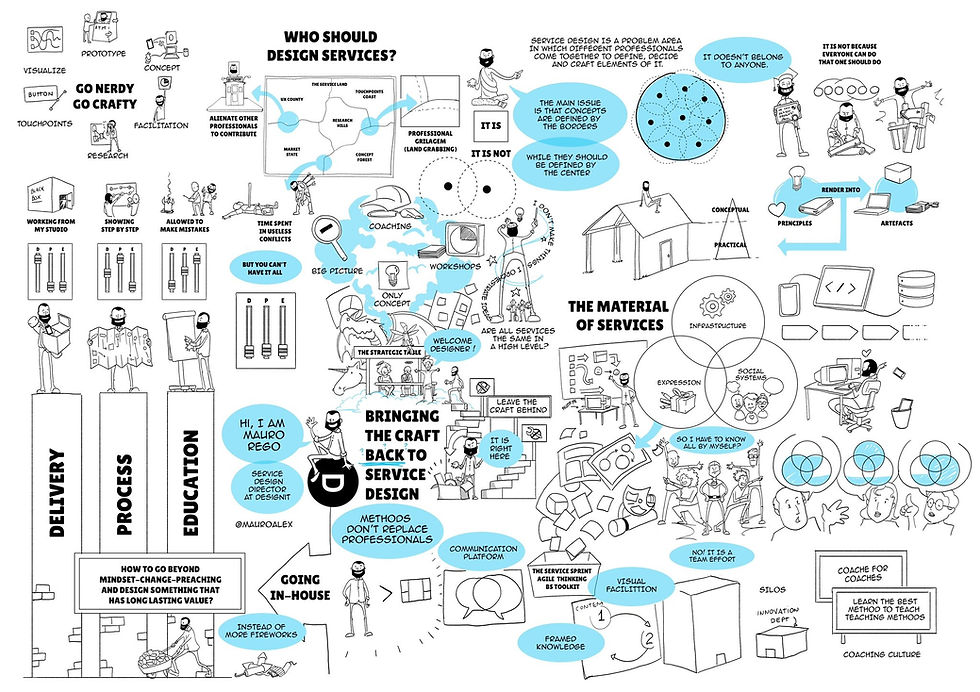
Thus, we might also help you run online sprints with suppliers, clients and customers!
Here what we actually offer your organisation, business partners and clients:
Using Miro.com for CJM, MVP, VP & BMC sprints in LEAN UX-development teams.
As design agency we combine both agile CX & UX-teams by LEAN Design Sprints.
After you read A beginner’s guide to rocking remote team facilitation book us!

Kommentarer