


Circular Value Chain & Economy
- Bjarne Jensen
- 7. okt. 2024
- 2 min læsning

Circular business models are instrumental in driving positive change for nature action. They focus on maximizing the value and utility of materials across the entire product lifecycle, thereby minimizing environmental impacts and promoting active participation in the economy. Below article discuss the different type elements in Circular Economy.
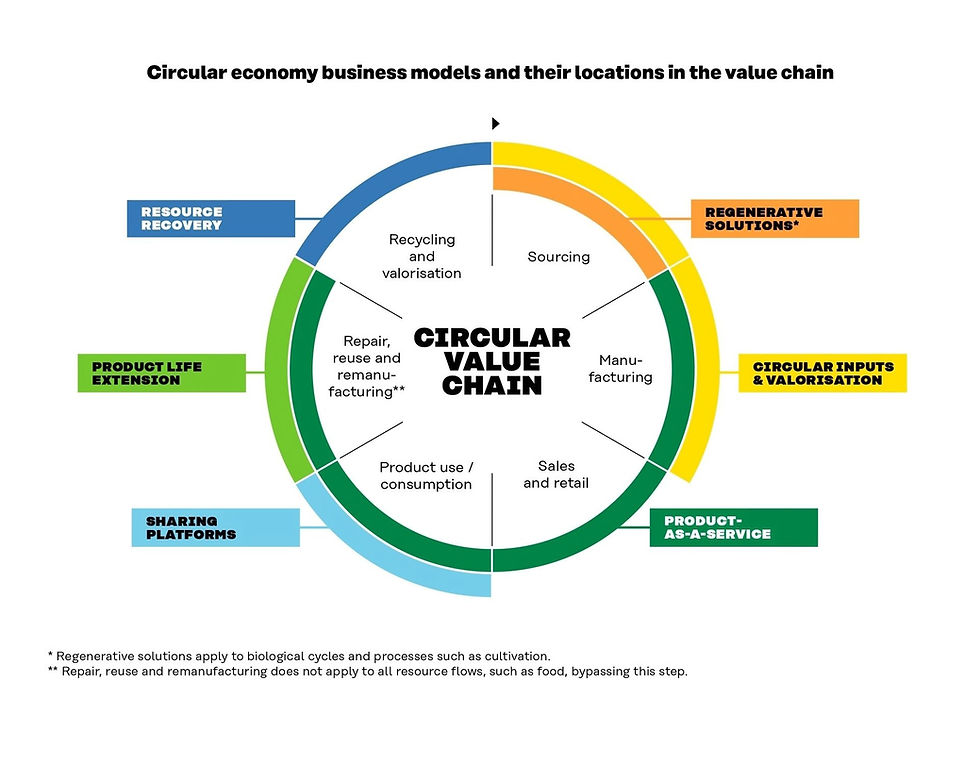
Circular Value Chain
Circular business models are instrumental in driving positive change for nature action. They focus on maximizing the value and utility of materials across the entire product lifecycle, thereby minimizing environmental impacts and promoting active participation in the economy.
The role of circular strategies becomes increasingly critical when addressing biodiversity impacts. The challenge lies in pinpointing which business models effectively alleviate environmental pressures.
▪ Circular Inputs and Valorization model advocates for the use of renewable, reusable, recyclable, and land-efficient materials. It stresses the importance of valorizing underutilized products and side streams.
▪ Product-Life Extension encourages the use of durable products and supports their longevity through maintenance, repair, refurbishment, and remanufacturing.
▪ Product as a Service shifts the focus from product ownership to utility and service, fostering the use of durable products across multiple users.
▪ Sharing Platforms use digital technology to facilitate the sharing, renting, selling, and reuse of goods, optimizing the use of resources.
▪ Resource Recovery captures and repurposes products and raw materials at the end of their lifecycle.
▪ Regenerative Solutions are focused on enhancing the vitality of the bioeconomy through practices that improve soil health, carbon sequestration, and biodiversity.
As organizations adopt these models, they move towards a harmonized approach where economic activities support and sustain natural habitats and biodiversity. This alignment is essential for the long-term viability of both the environment and the industries that rely on its resources.
Source: Sitra
Kommentarer